Top executives: comfort kills ambition
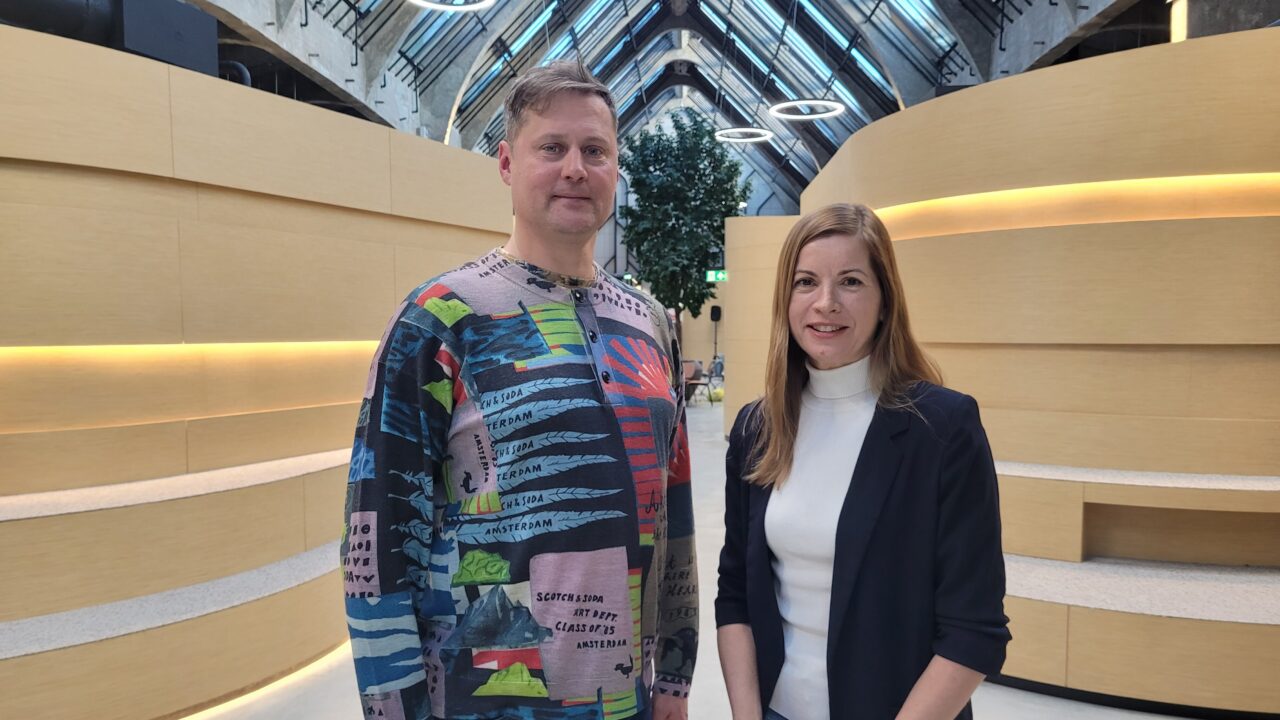
Alongside constant crises from the external environment, the courage of both entrepreneurs and ordinary people is also being eroded by already achieved success and well-being.
“Estonians are too satisfied with the level of economic progress they’ve achieved, and as a result, they tend to resist new developments and investments,” said Gert Jostov, head of Kaamos Group, on the Estonian-language program “Tööandjate tund.”
He was echoed by Kristjan Vanaselja, board member of PARE and founder of the gig work platform GoWorkaBit, who himself became an entrepreneur twelve years ago.
“We have reached a level of economic security where risk appetite and the willingness to start or operate a business have decreased,” he explained. “If a stable income isn’t visible, people are less willing to take risks like I did when starting out—leaving a high-paying job, registering as unemployed, and beginning to build a company.”
The recent years, marked by challenges in export markets and a constant stream of new crises, have also been shaped by the volatility of the economic environment. While entrepreneurs must invest in technology, digitalization, and people to remain competitive in export markets, according to Gert Jostov, what they expect from the state is stability in the economic environment.
Tax and investment stability should be maintained for years
“The state should provide certainty and ensure predictability, along with a stable long-term tax environment, so that investment confidence—and in turn consumer confidence—can return,” said Gert Jostov. According to him, tax and investment stability should be maintained for at least five years, during which the core rules would not change.
“Let’s try to imagine how people in car sales are supposed to manage—taxes are introduced, then removed, or maybe not. Consumer confidence fluctuates significantly because of this, and it directly affects business activity,” Jostov added.
Although, according to Kristjan Vanaselja, it is emphasized that Estonia’s tax burden will decrease this year, a record budget deficit of €2.5 billion does not allow for long-term tax stability to be predicted.
“This is essentially a postponed tax increase and does not give us, as entrepreneurs, confidence that it won’t eventually fall on us,” he explained.
Energy price volatility drives businesses away
In addition to taxes, according to Mari Krass, head of Magnum Group, the state faces more strategic issues that require a longer-term outlook beyond election cycles. “In energy policy, we would expect a bold approach from the state,” she noted as an example. “This doesn’t concern only energy-intensive industries, but all activities and sectors that consume energy. It’s extremely difficult to invest in Estonia when input costs fluctuate on such a large scale.”
According to Kristjan Vanaselja, companies themselves also need a clear internal action plan. “We can’t influence much of what happens beyond our borders. But we can create certainty for ourselves through how we manage our companies,” he explained. “If you have a plan, you may need to adjust it, but it still gives you a direction to move forward.”
The first thing investors ask about is the workforce
A major challenge for both Estonia and neighboring countries is the shortage of workers with the necessary skills.
“Fine, energy issues might get resolved, the tax environment may become stable, and investment confidence could be there—but can I actually find the people here to run my business? That will be a key question for every investor,” emphasized Kristjan Vanaselja.
According to Gert Jostov, the root cause of the labor shortage—low birth rates—is Estonia’s biggest unresolved issue. “AI and other technologies allow us to further increase productivity, but from the perspective of preserving language, culture, and the economy, we need more than that. AI alone won’t save us,” he noted.
Recruiting foreign workers with the necessary skills is unavoidable, but it must be done in a way and at a scale that is acceptable to society.